Te llamamos
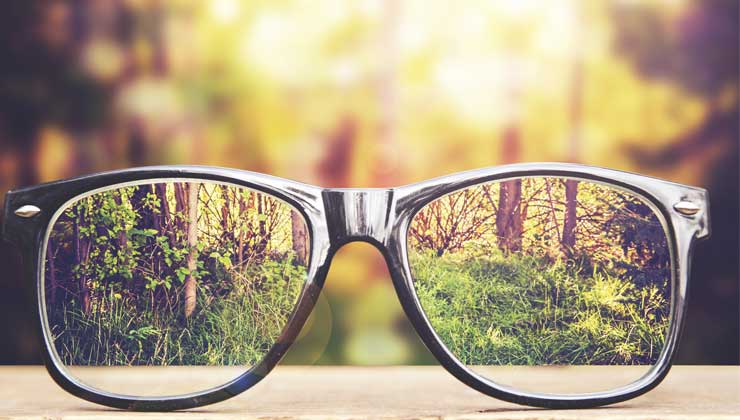
La miopía es uno de los defectos visuales más comunes en el mundo y afecta tanto a niños como a adultos. Se caracteriza por una dificultad para ver con claridad los objetos lejanos, mientras que la visión cercana suele mantenerse nítida. Comprender sus causas, síntomas y opciones de corrección es esencial para preservar la salud ocular y evitar complicaciones a largo plazo.

Afecta a
1/4
parte de la población, cifra en aumento
Corregible con
2
técnicas: láser o lentes intraoculares
Con más de
8
dioptrías, riesgo de glaucoma y desprendimiento de retina
¿Qué es la miopía?
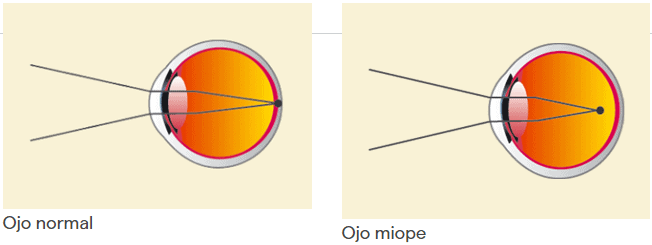
La miopía es un error de refracción ocular que ocurre cuando la luz que entra en el ojo se enfoca delante de la retina en lugar de hacerlo directamente sobre ella. Esto provoca que los objetos lejanos se vean borrosos, mientras que la visión cercana se mantiene clara.
Este defecto visual aparece porque el globo ocular es más largo de lo normal o porque la córnea tiene una curvatura demasiado pronunciada. En ambos casos, la imagen no se forma correctamente en la retina.
La miopía no es solo una cuestión estética o de comodidad; también puede incrementar el riesgo de padecer enfermedades oculares más graves si progresa a niveles altos. Por ello, es importante un diagnóstico temprano y un seguimiento regular con especialistas.
¿Por qué se produce?
La causa principal de la miopía suele estar relacionada con factores genéticos. Es frecuente que los niños cuyos padres son miopes también desarrollen este defecto visual. Sin embargo, los factores ambientales han cobrado gran importancia en los últimos años.
El estilo de vida actual, con un uso excesivo de pantallas y una menor exposición a la luz natural, ha favorecido un aumento significativo de los casos de miopía en la población infantil y adolescente. Pasar muchas horas enfocando de cerca puede contribuir a la aparición y progresión de lo que se conoce como miopía progresiva.
En adultos, la miopía puede estabilizarse, aunque en algunos casos sigue avanzando y se asocia a un mayor riesgo de patologías como el glaucoma o el desprendimiento de retina.
¿Cómo se puede prevenir?
La miopía no siempre se puede evitar, pero sí es posible reducir su progresión y controlar sus efectos. La detección temprana es clave, especialmente en niños, ya que permite aplicar tratamientos y pautas de control.
Pasar tiempo al aire libre, limitar el uso prolongado de pantallas, mantener una distancia adecuada al leer o estudiar y acudir a revisiones oftalmológicas periódicas son medidas que ayudan a proteger la salud visual. La prevención está más relacionada con el control del avance que con la desaparición del defecto.
¿Qué diferencia hay entre miopía y astigmatismo?
Aunque ambas son alteraciones de la refracción ocular, presentan diferencias importantes.
La miopía se produce cuando la luz se enfoca delante de la retina, provocando visión borrosa de lejos. El astigmatismo, en cambio, se debe a una curvatura irregular de la córnea o el cristalino, lo que genera imágenes distorsionadas a cualquier distancia.
Ambos defectos pueden coexistir en un mismo ojo, lo que requiere un diagnóstico preciso y un tratamiento de corrección adaptado a cada caso.
¿Qué ven las personas con miopía?
Las personas miopes perciben los objetos lejanos desenfocados, como si estuvieran cubiertos por una ligera neblina. Esto puede dificultar tareas cotidianas como conducir, identificar señales en la calle o seguir una clase desde la última fila. En cambio, los objetos cercanos suelen verse con nitidez, lo que explica por qué muchos niños miopes pueden leer o usar dispositivos sin dificultad aparente.
Síntomas de la miopía
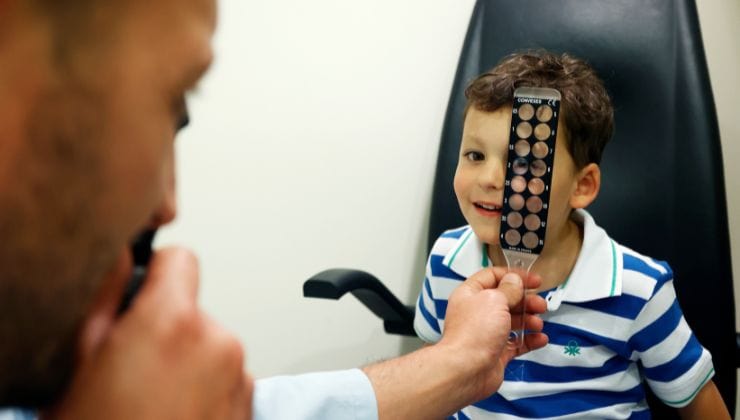
El síntoma más característico es la visión borrosa de lejos. También pueden aparecer dolores de cabeza, cansancio ocular o la necesidad de entrecerrar los ojos para enfocar mejor. En niños, la miopía suele manifestarse en bajo rendimiento escolar o en la costumbre de acercarse mucho a los libros o pantallas.
Tratamientos asociados
Existen diferentes opciones de corrección de la miopía:
- Gafas o lentes de contacto para miopía, que permiten enfocar correctamente la luz sobre la retina.
- Lentes de contacto especiales, diseñadas para controlar la progresión de la miopía en niños.
- Cirugía para la miopía, mediante técnicas de cirugía refractiva con láser, que remodelan la córnea para corregir el defecto visual.
La elección del tratamiento depende de la edad, el grado de miopía y el estilo de vida de cada paciente. En IMO GRUPO Miranza se realiza una valoración personalizada para recomendar la mejor opción en cada caso.
Especialistas que tratan esta patología





Preguntas frecuentes

Lo más importante para hacer una angiografía es que el paciente no sea alérgico a las sustancias que se van a inyectar.
Es una técnica diagnóstica para determinar las estructuras patológicas y anormales que tiene la retina, tanto en sus vasos como en sus diferentes capas. Es válida para la degeneración de la mácula, para la retinopatía diabética y para otras muchas alteraciones maculares y para vasculopatías.
La verde de indocianina es una técnica que se utiliza en algunos casos de degeneración macular asociada a la edad exudativa y sirve para definir los neovasos y, ocasionalmente, se utiliza para diagnosticar alguna otra enfermedad. La angiografía fluoresceínica es la técnica más estándar para el estudio de las enfermedades de los vasos y de la retina en general.
La angiografía es una técnica que sirve para delinear los casos de la retina o la coroides. Se utilizan diferentes contrastes, normalmente la fluoresceína sódica o el verde indocianina. Esta exploración también es muy útil para el diagnóstico de otras afecciones de la retina, especialmente del llamado epitelio pigmentado. En general, las angiografías sirven para estudiar múltiples enfermedades de la retina y su diagnóstico.
No es contraproducente para ningún tratamiento ocular.
Durante unos días, especialmente durante las dos primeras semanas, debe evitar frotarse los ojos, bañarse en piscinas y maquillarse los párpados.
En general, el paciente operado de Lasik tiene una visión aceptable o cercana a su máxima visión, a las pocas horas. Sin embargo, en algunas ocasiones, la visión tarda en mejorar alrededor de una semana.
Hoy en día, se dispone de varias técnicas. La más popular para los pequeños defectos refractivos, tanto la miopía, como la hipermetropía y el astigmatismo es el LASIK. Pero también hay otras opciones para casos más especiales: lentes fáquicas, extracción del cristalino, lentes intracorneales o anillos intraestromales.
Cuando la ptosis afecta a la visión o provoca molestias funcionales o psicológicas, el momento adecuado es cuanto antes. En niños, es esencial intervenir a tiempo si existe riesgo de ambliopía. En adultos, la decisión se toma tras una evaluación médica personalizada, teniendo en cuenta las necesidades del paciente y los problemas visuales o estéticos que presente.
Si bien es cierto que la más conocida, la técnica LASIK, no es una opción adecuada para las córneas finas, existen alternativas con otras técnicas que sí pueden realizarse: el láser excímer o bien las lentes fáquicas.
La miopía es un defecto refractivo que se produce cuando el globo ocular es demasiado alargado o la córnea demasiado curva, por lo que las imágenes se enfocan delante de la retina y no sobre ella, dificultando la visión lejana. Suele corregirse con gafas o lentes de contacto, aunque la cirugía refractiva es una opción para quienes desean prescindir de corrección óptica. Salvo excepciones, la intervención debe realizarse una vez se haya estabilizado la miopía, de los 20 años en adelante. A partir de ahí, el factor edad no limita una posible cirugía, aunque sí influye en la elección de la técnica, que deberá ser valorada por el oftalmólogo.
Recomendamos realizar una visita a un centro especializado, aunque cuando se busca corregir un defecto refractivo a partir de los 50-55 años, suele implantarse una lente intraocular que sustituye el cristalino, la lente natural del ojo que con el tiempo va perdiendo elasticidad (presbicia) y transparencia (catarata). De este modo, la prótesis artificial implantada es ópticamente mejor que el cristalino natural del paciente de cierta edad.
Quizá te interese


IMO Grupo Miranza Barcelona
Josep María Lladó, 3
08035 Barcelona
Tel: 934 000 700
E-mail: informacion@imo.es
Ver mapa en Google Maps
En coche
Coordenadas navegador GPS:
41º 24’ 38” N – 02º 07’ 29” E
Salida 7 de la Ronda de Dalt (lado montaña). La clínica cuenta con un aparcamiento de más de 200 plazas.
En bus
Autobús H2: Rotonda de Bellesguard, parada 1540
Autobús 196: Josep Maria Lladó-Bellesguard, parada 3191
Autobuses H2, 123, 196: Ronda de Dalt – Bellesguard, parada 0071
Cómo llegar a IMO desde:

IMO Grupo Miranza Madrid
C/ Valle de Pinares Llanos, 3
28035 Madrid
Tel: 910 783 783
E-mail: administracion.madrid@imo.es
Transporte público
Metro Lacoma (línea 7)
Autobuses:
- Líneas 49 y 64, parada “Senda del Infante”
- Línea N21, parada «Metro Lacoma»
Horarios
Atención al paciente: de lunes a viernes, de 8 h a 21 h

IMO Grupo Miranza Andorra
Av. de les Nacions Unides, 17
AD700 Escaldes-Engordany, Andorra
Tel: (+376) 88 55 44
Ver mapa en Google Maps